Studying the impact of plastic pollution on sea turtles
to better assess the risks to human health.
TORPP is a multidisciplinary One Health research group founded in 2020, committed to assessing the toxicity of plastic pollution on ecosystem health and human health.
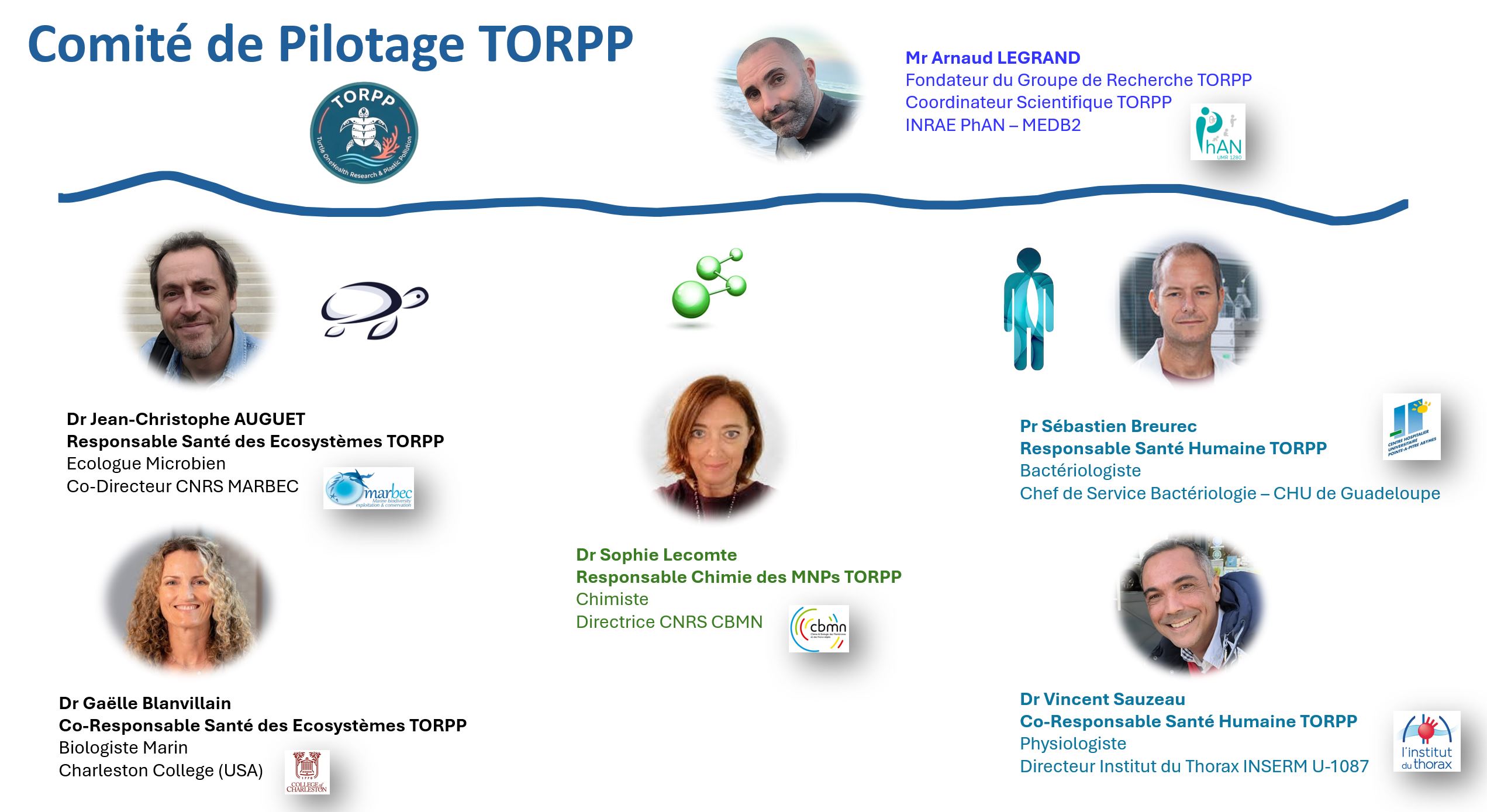
Built around a Scientific Steering Committee that coordinates a community of 31 researchers covering 16 scientific disciplines, TORPP develops excellent research projects through an innovative, cross-cutting human/sea turtle analysis.
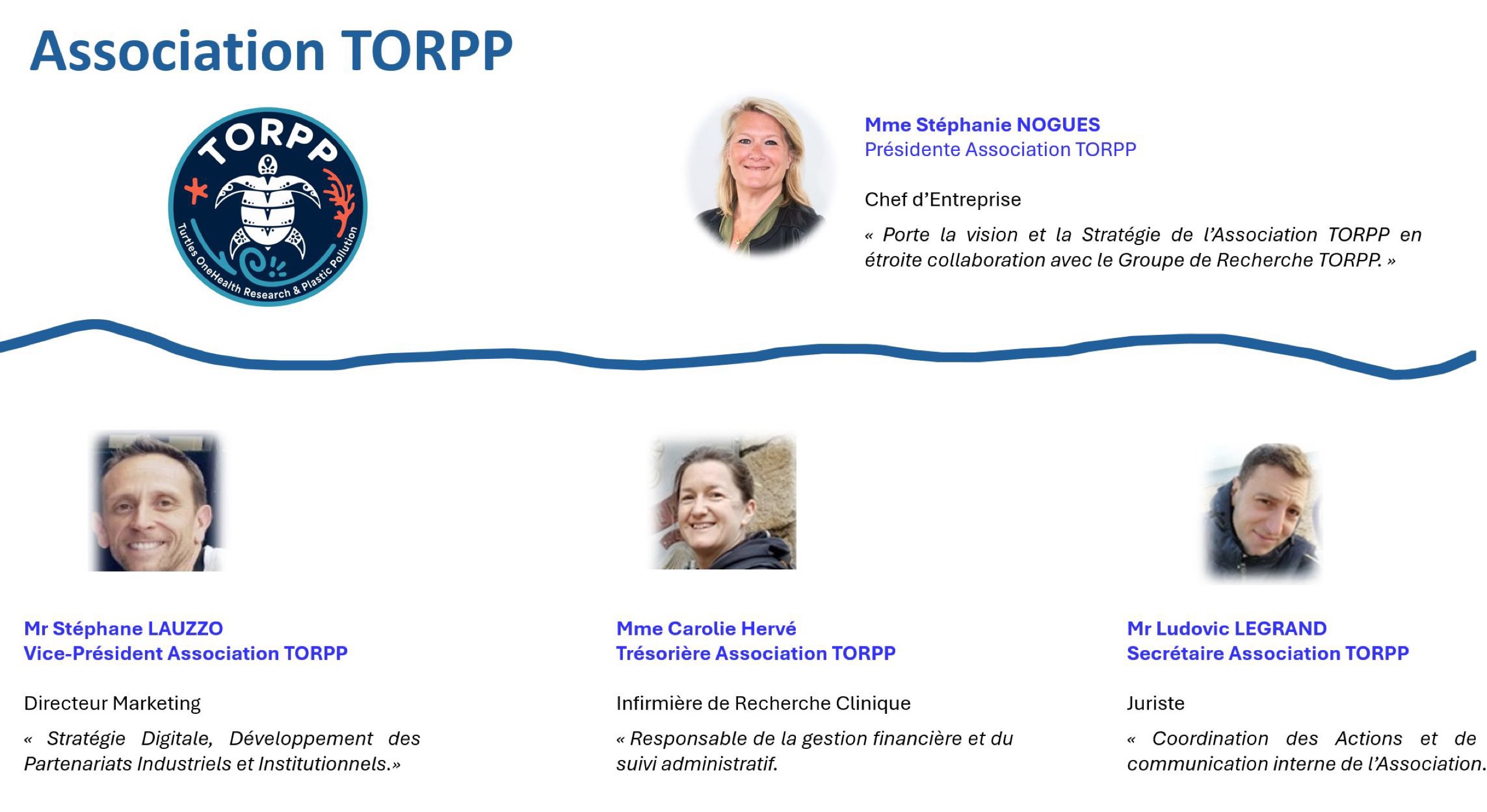
Since 2024, it has also included an Association whose aim is to make accessible and disseminate the knowledge produced by the research ecosystem, and to coordinate inclusive awareness-raising and prevention initiatives with civil society and industry.
TORPP supports and develops research, education, protection and awareness-raising initiatives on the topic of environmental plastic pollution, within a One Health dynamic.
We run research projects on plastic pollution to measure and understand its environmental and health implications, through the One Health approach.
We take part in calls for proposals and turn to patrons and our members to fund the research projects led by our researchers, as well as the association's awareness-raising initiatives
Without awareness, there is no action. We communicate on scientific advances to raise awareness among public authorities, institutions and the general public.
We take part in and organise awareness-raising initiatives on plastic pollution and its environmental and health implications, for all stakeholders in society.
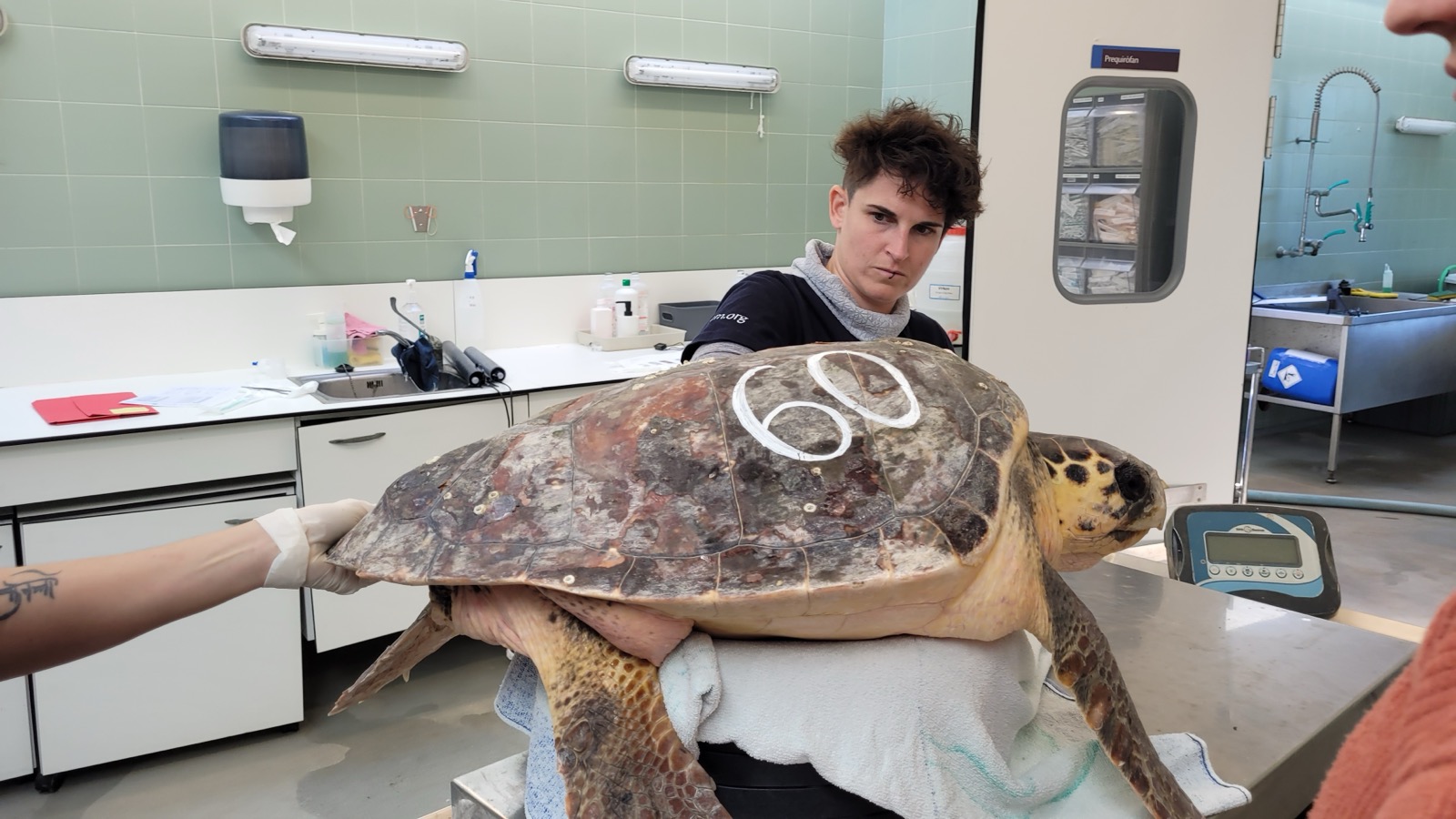
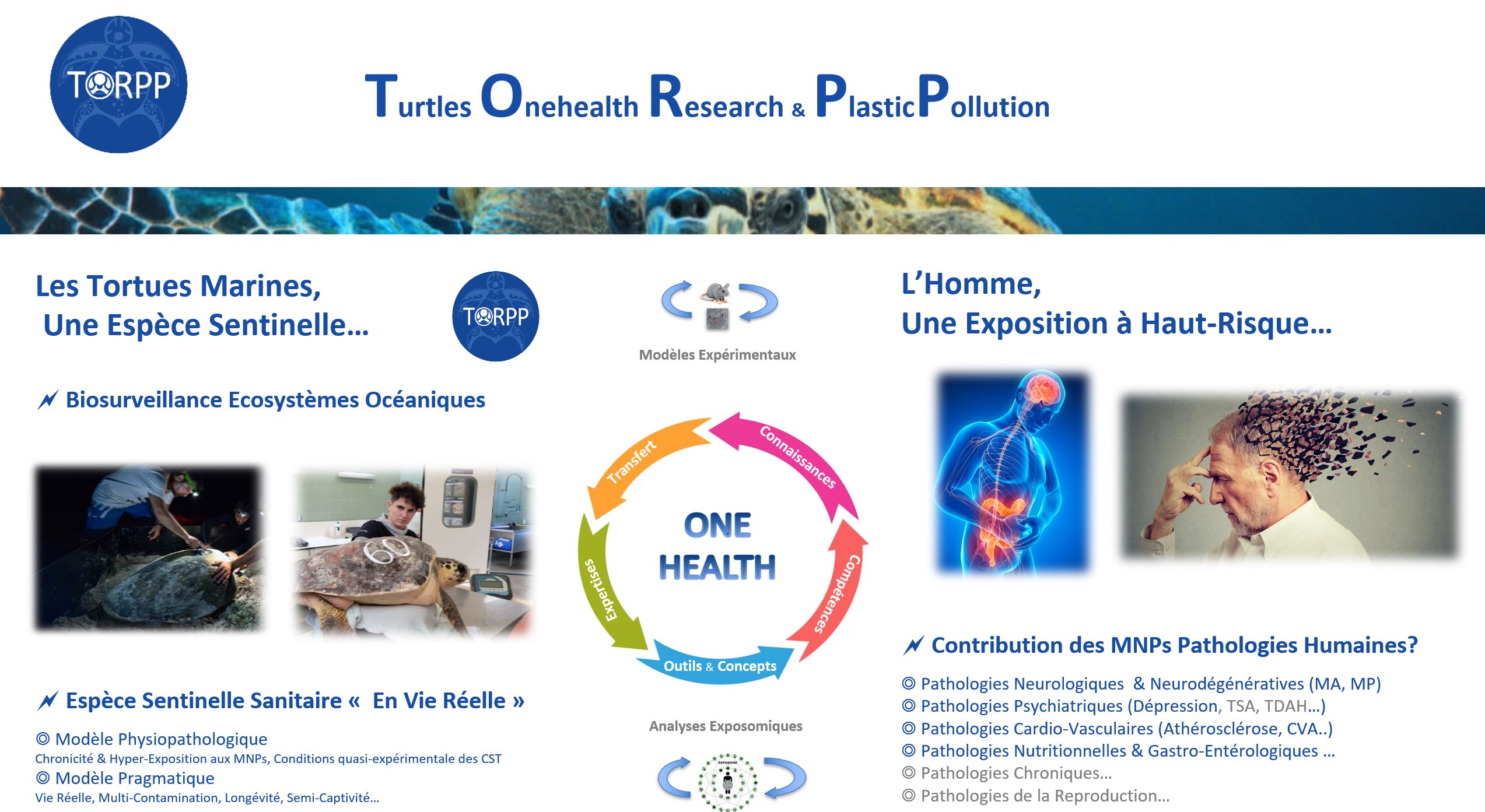
The sea turtle is probably the most heavily contaminated organism with micro- and nanoplastics (MNPs) in the biosphere: it lives as long as we do and, like us, absorbs many other pollutants. Understanding the impact of this acute exposure to MNPs on sea turtles sheds direct light on the risks to our own health.
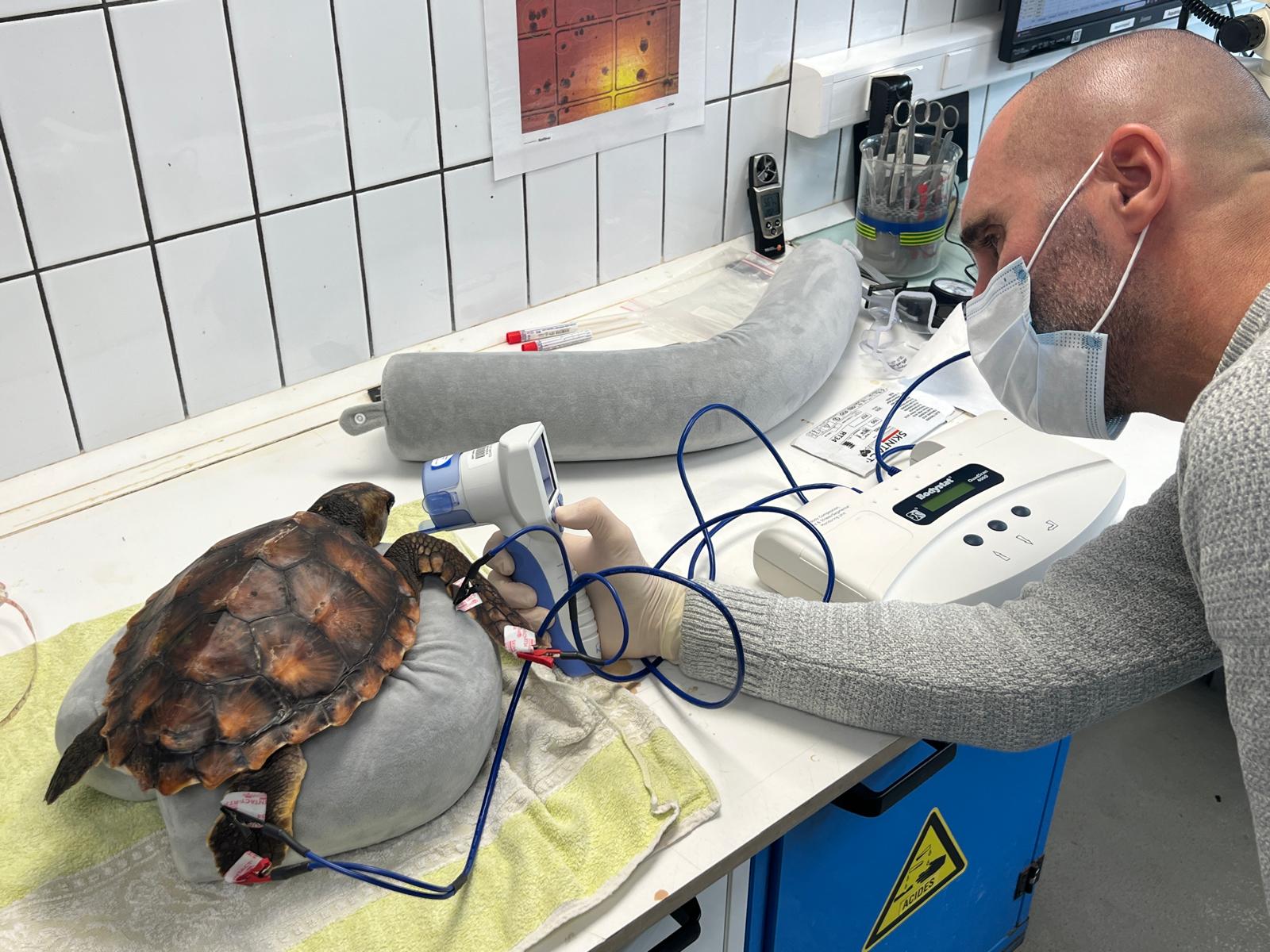
Research carried out in marine biology since the late 20th century has established the toxicity of plastic pollution on marine organisms, as well as its complexity. Factors at play include the physico-chemical nature and size of the plastic polymer (macro/meso/micro/nanoplastics), the chemical additives incorporated, and the pathways of contamination (ingestion, inhalation…). Today, through more than 15 projects designed or in development, TORPP is engaged in 3 major research areas on micro- and nanoplastics (MNPs): neurotoxicity, nutritional toxicity and cardiovascular toxicity.
A Scientific Committee of 31 researchers and experts, in disciplines as varied as microbial ecology, neurophysiology and marine biology, and a network of scientific, patron and institutional partners.
Every contribution — time or resources — helps advance research on plastic pollution.