Plastic pollution
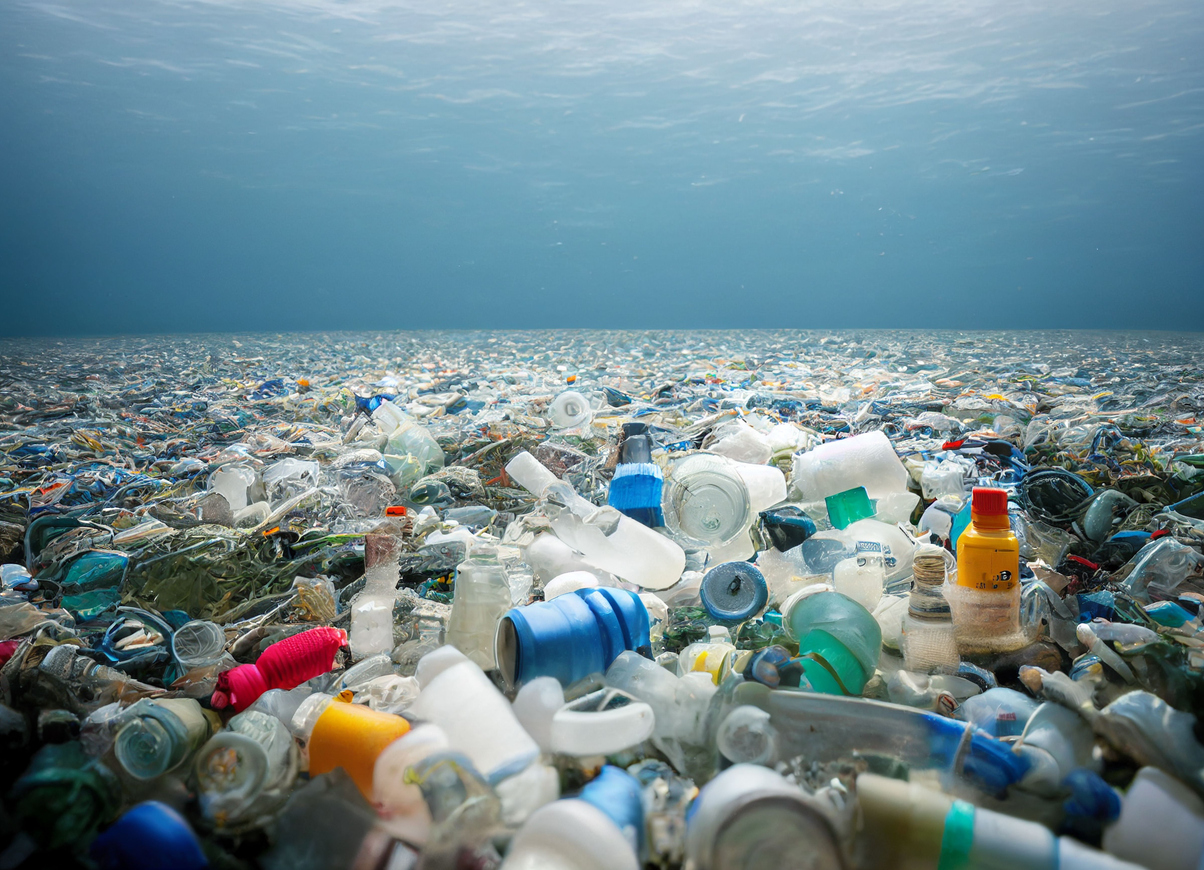
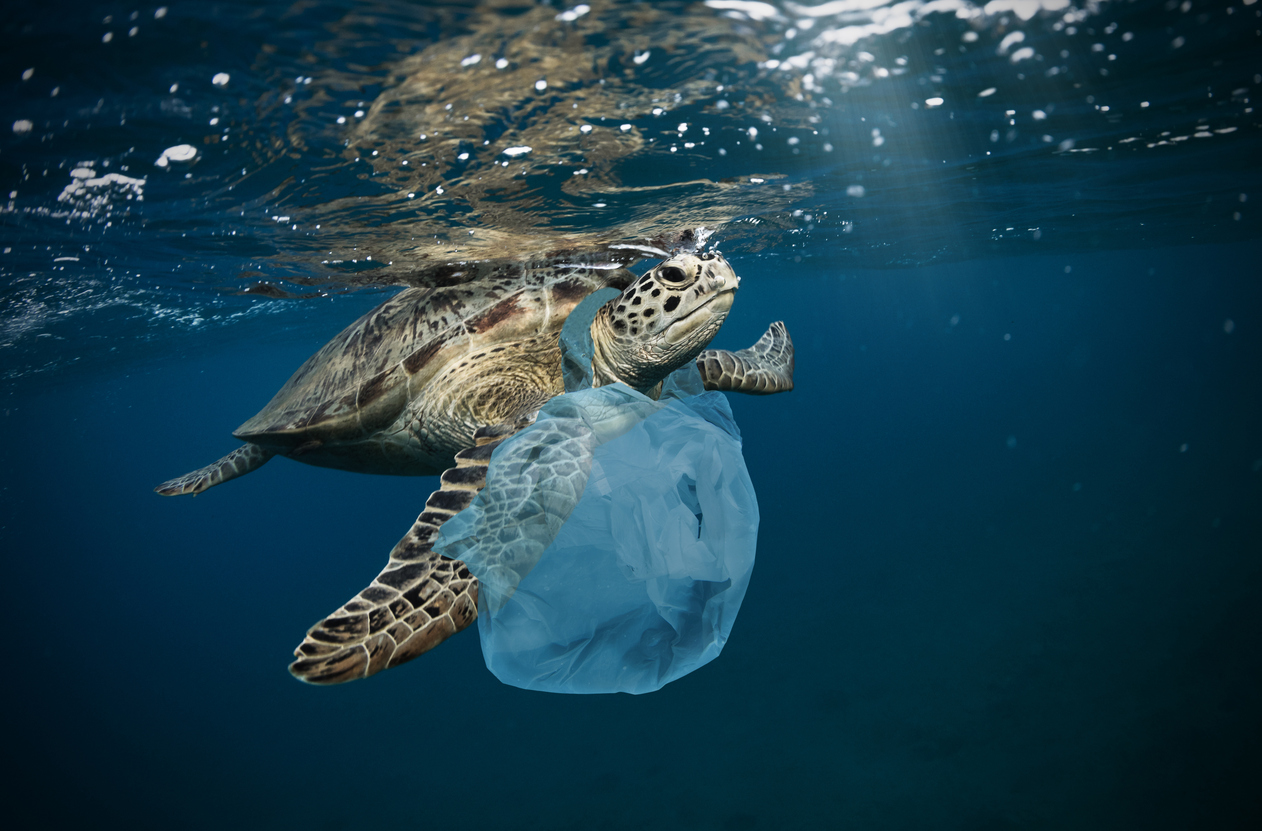
Plastic pollution ranks among the greatest environmental and health challenges of our time. Jambeck et al. (2015) estimate that 4.8 to 12.7 million tonnes of land-based plastic waste entered the oceans in 2010 alone — the weight of more than 1,200 Eiffel Towers. This adds to the more than 5,000 billion pieces of plastic debris already polluting the world's oceans, according to Eriksen et al. (2014) — the equivalent of 40 times the Earth's surface. This pollution has continued to grow ever since.
From macro-waste to MNPs
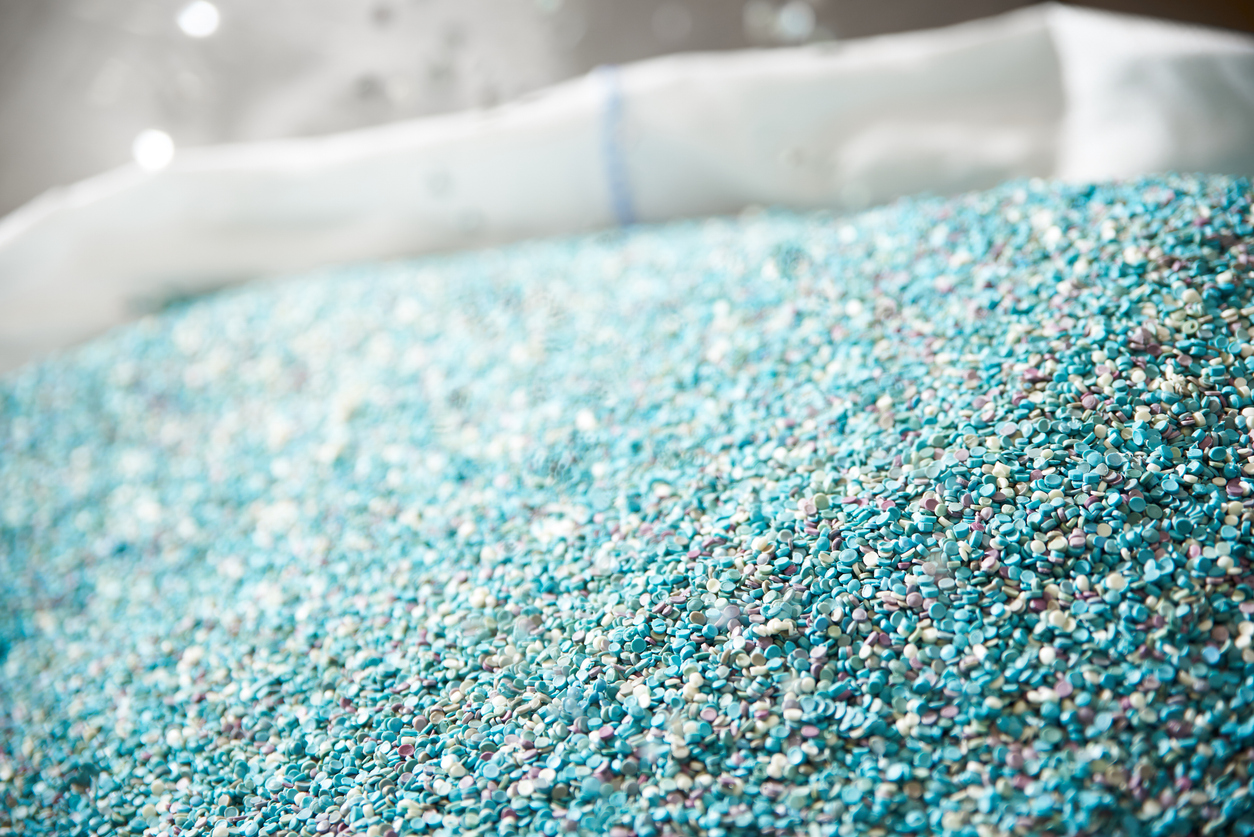
Under mechanical, thermal and chemical stress, this macro-waste breaks down into microplastics and then nanoplastics (MNPs). Omnipresent, they are ingested, inhaled, and can cross the skin barrier to spread throughout organisms. The entire biosphere is now contaminated, and MNPs bioaccumulate all along the food chain.
What we know about their toxicity
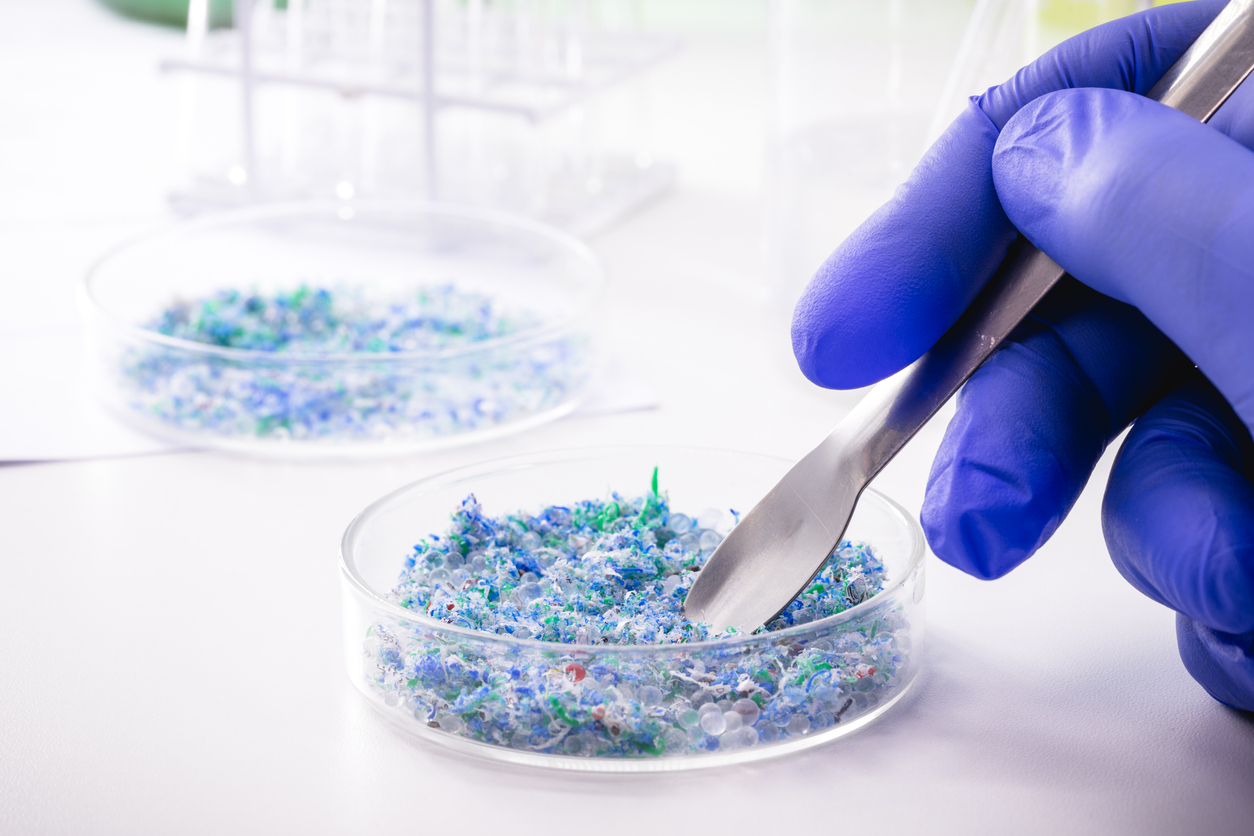
For more than a decade, marine biology has documented multifaceted toxicity of microplastics and nanoplastics in marine organisms — from feeding to reproduction, and even cognitive function. In humans, research lags considerably behind.
research studies worldwide on the toxicity of micro- and nanoplastics (MNPs) in humans, in 2026 — compared with 37,840 on radiation and 1,011 on heavy metals. Yet we are increasingly aware of our massive exposure to these particles through food, cosmetics or inhaled air.
This toxicity remains largely misunderstood at the mechanistic level: the chemical nature of the particles, their interactions with other contaminants, particle size and exposure duration all strongly influence the toxicity profile observed. Effects already documented in marine biology include: altered feeding activity, growth retardation, toxicity to reproduction and gene expression, reduced locomotion and survival, dysbiosis, neurotoxicity, and impaired cognitive function.
Why the sea turtle? The sentinel species
Every year, dozens of sea turtles are admitted to rehabilitation centres for decompression accidents, near-drownings or trauma. These long months in semi-captivity are a unique opportunity to study the impact of micro- and nanoplastics (MNPs) on their physiology and health.
Sea turtles are 20 to 100 times more contaminated with micro- and nanoplastics (MNPs) than marine mammals (dolphins, whales…), even though the latter are considered apex predators. They are therefore probably the most contaminated living organisms in the biosphere. They also have a lifespan very similar to that of humans, quite faithfully reproducing the chronicity of our own exposure to MNPs. Like us, they are also multi-contaminated: pesticides, heavy metals, PFAS… and today it is precisely the combination of contaminants that is suspected in certain diseases. Finally, for reference, more than 80 sea turtles are admitted every winter to the CESTM at the Aquarium de La Rochelle — ideal semi-captive conditions for understanding the effect of MNPs on their physiology. In short, it is precisely this accumulation under real-world conditions that makes the sea turtle such a powerfully resolutive sentinel species: detecting MNP-related physiopathologies in turtles makes it possible to anticipate risks that are still invisible in humans.
The reverse transfer
Marine biologists and ecotoxicologists have been studying MNPs for decades and could offer valuable guidance to physicians and human health researchers on the best strategies for detecting, quantifying and characterising them. Conversely, human medicine has access to numerous tools, biomarkers and concepts that remain largely absent from marine biology and wildlife veterinary medicine. Transposing them would help us better understand the mechanisms of MNP toxicity, but also improve diagnosis, the care of sea turtles in rehabilitation centres, and ecosystem monitoring. This is exactly the DNA of the TORPP research group, which aims to break down silos between the expertise, skills and experience of different disciplines, in order to maximise the effectiveness of research. #OneHealth.
One example is bioelectrical impedance analysis (BIA) — a technique for measuring body composition used in human medicine — which TORPP tested for the first time on hospitalised loggerhead sea turtles (Caretta caretta). Conversely, biological assays conventionally used on turtles and marine mammals to assess their contamination levels (B-esterases) were deployed for the first time in humans. This is the scientific power of the cross-species Human/Sea Turtle analyses championed by TORPP.

The One Health approach
Still marginal within our healthcare system and academic research, the One Health approach is an integrated, unifying approach that aims to break down silos between the scientific knowledge of different disciplines, in order to better address the health and environmental challenges threatening humans, animals and ecosystems.
Three kinds of health, one system
The sea turtle embodies this connection: by being exposed to the same contaminants as us, in the same environment, it very concretely links environmental health, animal health and human health.
By bringing together 19 scientific disciplines — from paediatrics to ecotoxicology, including marine biology and veterinary medicine — 16 institutions and 4 countries, TORPP breaks down silos between fields of knowledge to shape the research and healthcare of tomorrow.